

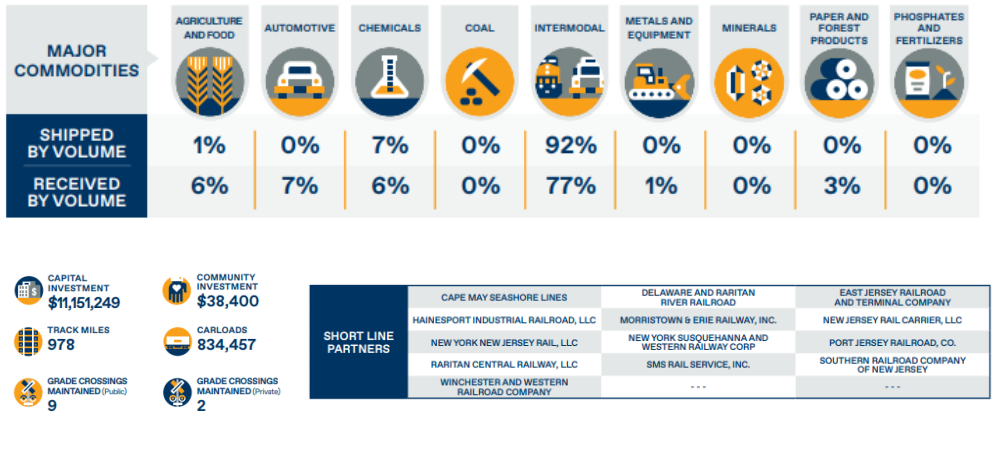
Consumers’ insatiable appetite for getting their products fast and cheap has driven intermodal transportation to be the top commodity group by volume for freight rail moving to and from New Jersey. But the biggest changes to the industry going forward could be a forthcoming merger of two freight rail behemoths.
Those were insights revealed during the Regional Rail Freight Update at the NJTPA’s Freight Initiatives Committee (FIC) meeting on August18. A panel of experts included:
- Arthur Feygelson, Manager, Industrial Development, CSX Transportation
- Kevin Hoffman, Associate Member, New Jersey Railroad Association (NJRRA) and Account Manager, Taylor Northeast
- Bob Bailey, President, NJRRA
- Michael Fesen, Executive Director, Government Relations, Norfolk Southern
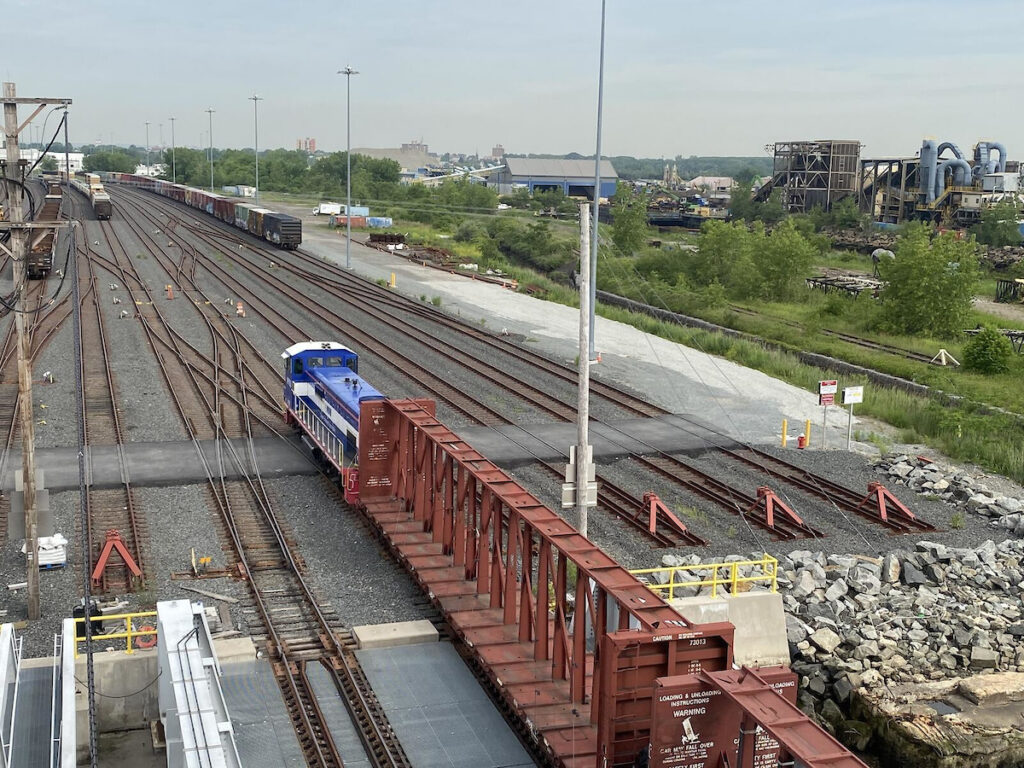
Most freight rail business in New Jersey is done by Conrail on behalf of CSX with many short-line partners in the state, Feygelson said. CSX invests about $12 million in capital improvement within New Jersey each year.
New Jersey has experienced a warehouse building boom in recent years but many of those new facilities have not been built near railroads. Jakub Rowinski, Manager, Freight Planning, at NJTPA added that a Freight Concept Development project in Morris County to allow for the movement of taller Plate F industry standard rail cars could open a Plate F freight rail route from Phillipsburg to the Whippany Line.
More than 60 percent of CSX’s revenue comes from merchandise freight, according to Feygelson.
A decade ago, coal would have been number one in revenue. Today, chemicals are by far the largest business group, making up about 32 percent of the merchandise category. Unique to the Northeast, waste is part of chemicals, he said, and it’s a major commodity that’s moved out of New Jersey and the greater New York City metropolitan area.
Norfolk Southern-Union Pacific Merger
The biggest impact on the industry in the coming years will likely be the consolidation of two of the largest freight rail companies in the nation. The boards of both companies have agreed that Norfolk Southern would be purchased by Union Pacific. If approved, the deal would create the third transcontinental railroad in North America but the first in the U.S. The other two are Canadian National and Canadian Pacific.
“This merger is actually late in the game as far as extending border to border,” Fesen said. There’s still a lot that needs to happen and approvals could take another two years. Ideally, you’d like a railroad system to look like Canada’s, he said, allowing a full range of products to go quickly from one end of the country to the other.
Railroads compete with one another but also with trucks, Fesen said. “We’re a system out there already,” he said but an 18-wheeler can roll up to a strawberry field in California and haul the product to Boston faster. And truck automation and platooning (in which one lead truck that guides two to three trucks behind it) is coming. “People want their stuff fast, fresh and cheap and we need to be as nimble as trucks to compete,” Fesen said.
With the administration’s effort to re-industrialize the U.S., railroads must be ready if manufacturing returns, Fesen said. “Unification of two railroads is going to get us there fast and with less friction between the two.”
A recording of the FIC panel discussion can be found on the NJTPA YouTube channel.