

If you’ve ever been to the Midtown Bus Terminal in Manhattan, you know it’s bustling. Hundreds of thousands of travelers use the facility every day, with routes stretching from Binghamton, New York, to Atlantic City, New Jersey. Well, expect more in the coming months and years as progress ramps up to build a new facility.
Port Authority’s David Torres and Robert Gilligan presented an update on the $10-billion project under way at the Joint Planning Prioritization and Planning and Economic Development Committee meeting on December 15.
Built in the 1950s and renovated in the 1970s, the facility “really is getting to a point where it makes sense to have total redevelopment,” Torres, Senior Project Manager, Capital Projects, said. This redevelopment is also in response to growing needs, with the 242,000 daily passengers served in 2019 projected to grow to 337,000 by 2040. Torres said there’s a 30-percent increase in rush hour buses to meet expected demand while a 40-percent increase in daily passengers is expected by 2040, also accounting for Covid impacts.
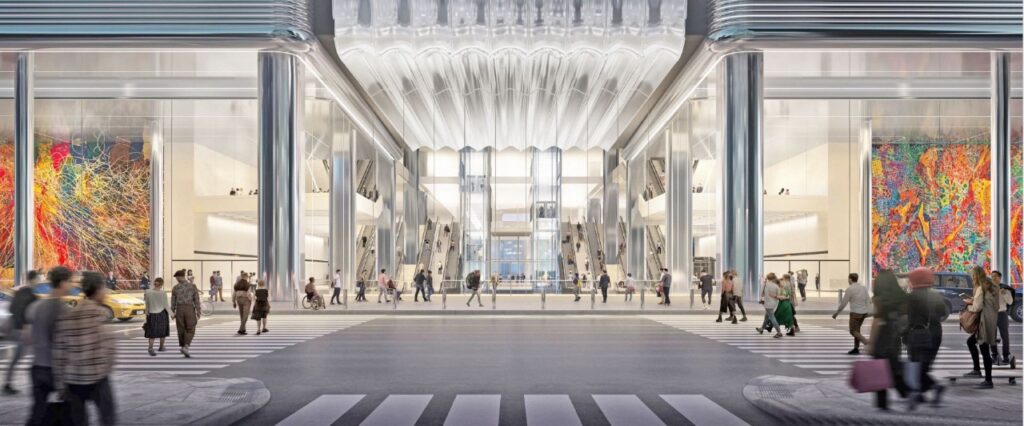
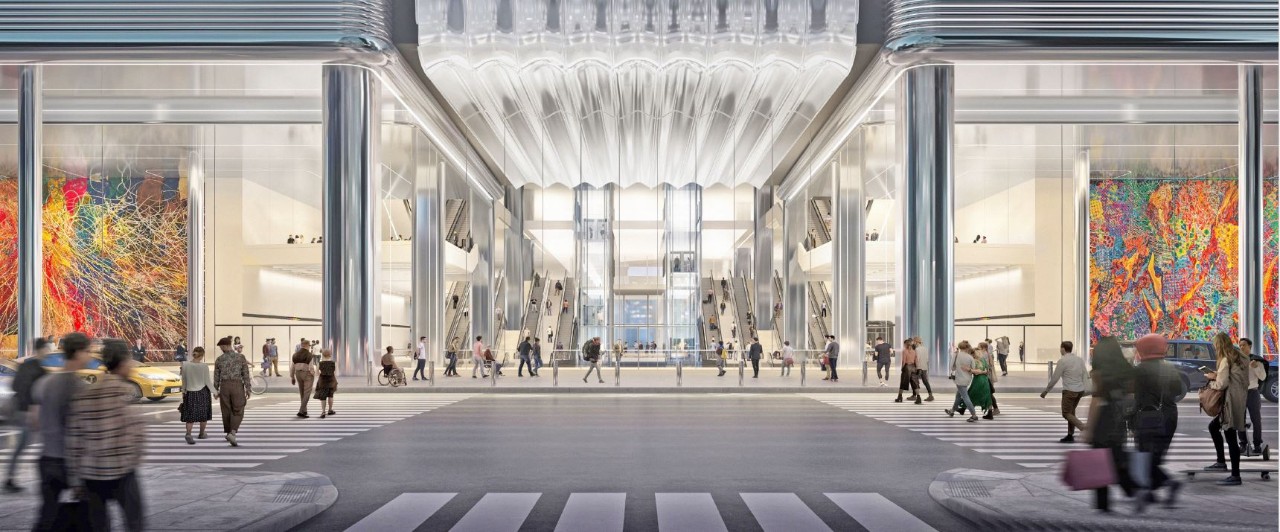
The new terminal will extend further west across 9th Avenue between 40th and 42nd Streets, where two towers of private development will be constructed. It will have five floors with more than 180 bus gates and retains a direct connection to the subway and Times Square transit hubs.
A storage and staging facility will serve as a temporary terminal during construction. It will include 300 to 350 bus storage spots across five levels and will improve bus reliability, reduce rush hour congestion in the Lincon Tunnel, removing the need to stage and store in New Jersey or local surface parking lots.
There are 187 loading positions in the existing facility, but the new one will be more flexible and efficient, Gilligan said. During construction, however, there will be only 130 gates available in the temporary terminal, which will be impactful.
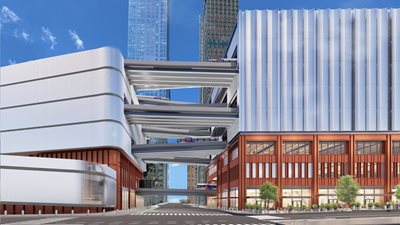
Building in a very dense area, construction work and new ramping will cause delays and friction in the system, officials said. Some bus passengers will walk an additional block to access the interim terminal while some passenger service will be located outside at temporary structures built on Dyer Avenue. “We’re trying to maintain as much as possible a lot of the comforts” in the existing facility but it is a temporary facility so it may not look like the final condition, Gilligan said.
A new ramp structure erected at Galvin Plaza west of 10th Avenue will include a bypass lane to prevent backups due to bus breakdowns, which creates a massive impact during rush hour. It also will allow buses to change floors without exiting the facility, reducing reliance on city streets in the current operation.
Work commenced in May 2025 on Dyer Avenue deck overs as part of Phase 1A, which is expected to last into 2027. Significant work will begin in the next few months on the ramps, storage facility and temporary terminal (Phase 1B) that will last until 2030.
Phase 2, estimated to last from 2030-2035, will see the original main terminal close and be demolished. The completion of the new terminal will allow the temporary decks to be converted to 3.5 acres of public space between 37th and 39th Streets.

Operational efficiency and straightforward communication in wayfinding are integral to the new facility. The North and South Wings will be linked with the closure of 41st Street to create a larger central atrium allowing public access. Wayfinding will use a numbering system for gates allowing passengers the ability to see directly how to get to different floors, Torres said. The current facility is walled and doesn’t engage with the streetscape, Gilligan said, adding that the new one will have much more street-facing retail.
A copy of the presentation is available here.