


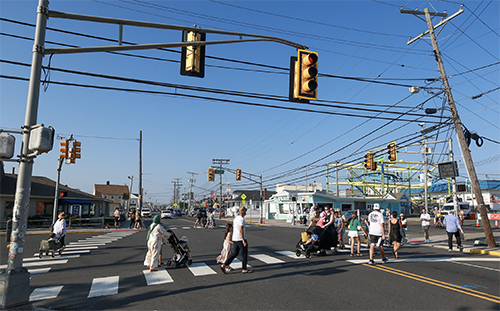
Traffic signals are everywhere on North Jersey’s heavily traveled roads. However, installing them, optimizing them for local conditions and maintaining them is often a costly challenge for state, county and local governments. The NJTPA is embarking on a study to take stock of traffic signals around the region, systematically assess where and how signals could be improved and create recommendations for strategies and investments, working with key officials and stakeholders, among other activities.
A preliminary estimate finds the New Jersey Department of Transportation (NJDOT) maintains about 2,000 signals in North Jersey; counties maintain over 2,600 and municipalities maintain another 2,600. The study will seek to create a mapped database of all traffic signals within the NJTPA region including location and jurisdiction.
Signals can vary greatly in characteristics and features including sizes and types of traffic signal heads, lenses, turning restrictions, placement and type of support structures, vehicle detection methods, countdowns for pedestrians and bicyclists, controller hardware and timing settings, among many others.
With the assistance of the consulting firm Michael Baker International, the NJTPA will gather information on the region’s signals and develop methodologies to screen for needs and potential investments. The study team will draw on input from a technical advisory committee that will include representatives of the NJTPA’s city and county member agencies, municipalities, NJDOT, and other relevant partners
A key product will be a Traffic Signal Strategic Investment Framework which will include policy, funding, and technology recommendations that align with the guidance and requirements of federal funding programs. The Framework will facilitate funding signal upgrades in specific corridors and/or individual intersections.
Further information and updates on the study will be posted on the NJTPA website.