

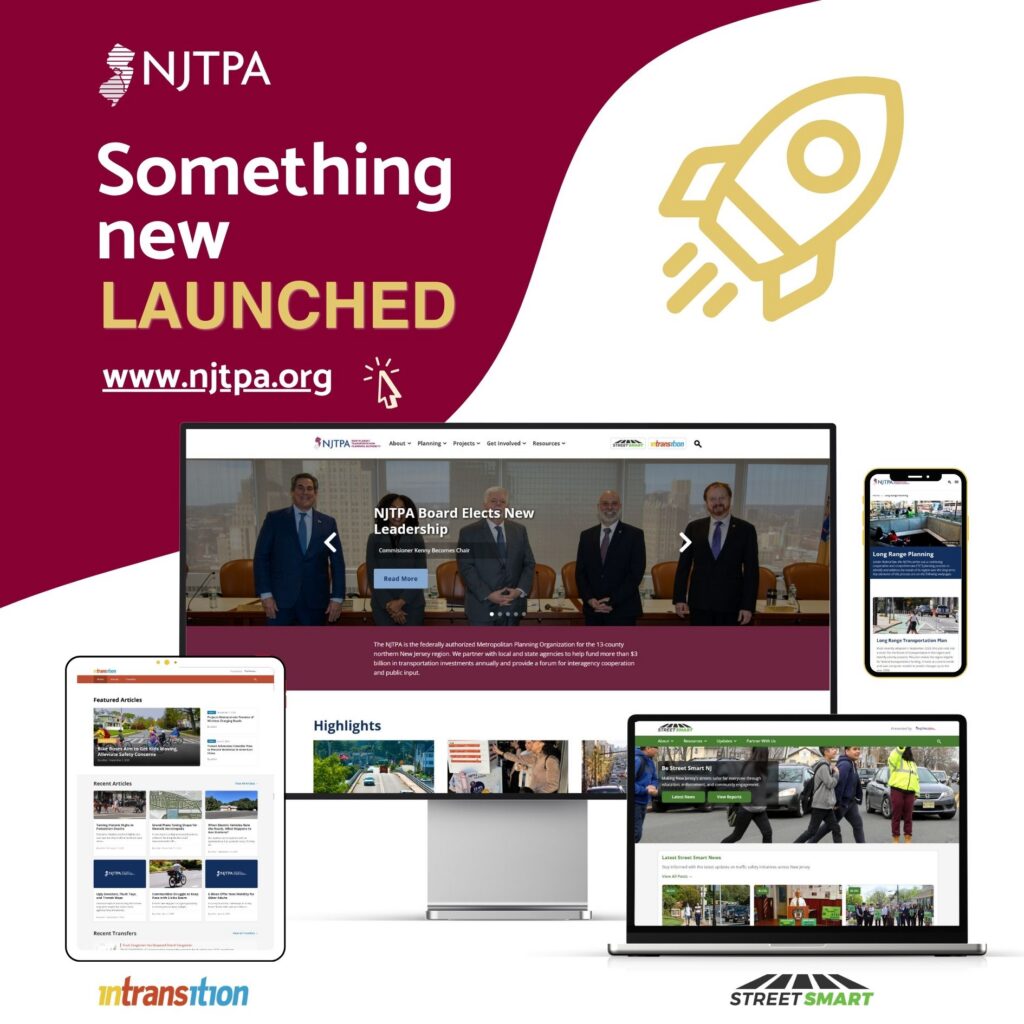
The NJTPA’s newly redesigned website is here, offering a simpler and more accessible way for residents, partners, and communities to connect with information that impacts how we get around every day across northern New Jersey.
Built using the newest technology standards, the site is fully responsive and easy to view on desktop computers, tablets, and smartphones. It also meets federal accessibility requirements, helping ensure that all users can navigate content comfortably and efficiently.
A major goal of this update was to simplify how information is organized and accessed. Studies, reports, data, and planning resources are now easier to find through clearer menus and a more intuitive layout. The new Studies page allows users to search by year, subregion, and program across all type of studies that are ongoing or completed. Whether you are looking for information on regional transportation trends, future plans, or ongoing initiatives, the site helps you get there faster and with less effort.
The newly redesigned website is intended to make NJTPA’s work more visible, understandable, and useful. With clearer organization and improved access to information, the site helps show how transportation decisions connect to everyday travel, local communities, and the region’s long-term growth. It also makes it easier for residents, partners, and stakeholders to stay informed and take part in shaping transportation priorities.
As part of the website refresh, both Street Smart NJ and InTransition magazine also have new looks. Street Smart NJ is a statewide public awareness pedestrian campaign created in 2013 and coordinated by the NJTPA. InTransition magazine, a collaboration between the NJTPA and New Jersey Institute of Technology (NJIT), offers articles on transportation issues, research, and trends.
We invite you to explore the new website and take advantage of the improved tools and resources. A more accessible and user-friendly site supports greater transparency, encourages public participation, and helps everyone stay connected as we plan for the future of transportation in the region.