
Now Accepting Applications
The New Jersey Department of Transportation, in coordination with the NJTPA, is accepting applications for the FY 2027 Safe Routes to School Grant Program. Grants are available for infrastructure projects that encourage and enable K-12 students to walk and bike safely to school.
Potential applicants must schedule a pre-application meeting by October 9, 2026 to be considered for funding. Applicants are also strongly encouraged to attend a SRTS Grant Training Webinar.
Applications are due November 13, 2026.
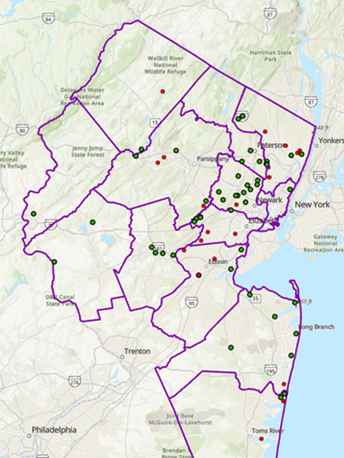
This program provides federal funds for projects and activities meant to enable and encourage children in grades K-12 to walk and bike safely to school. The program is funded through the Federal Highway Administration’s Federal Aid Program and is administered by the New Jersey Department of Transportation (NJDOT), in partnership with the NJTPA. Since 2014, 85 projects totaling more than $40 million in grants for design and construction have been awarded in the NJTPA region.
Program Objectives
- Enable and encourage children in grades K-12, including those with disabilities, to walk and bike to school.
- Make bicycling and walking to school a safer and more appealing transportation alternative, thereby encouraging a healthy and active lifestyle from an early age.
- Facilitate the planning, development, and implementation of projects and activities that will improve safety and reduce traffic, fuel consumption, and air pollution near schools.

Program Eligibility
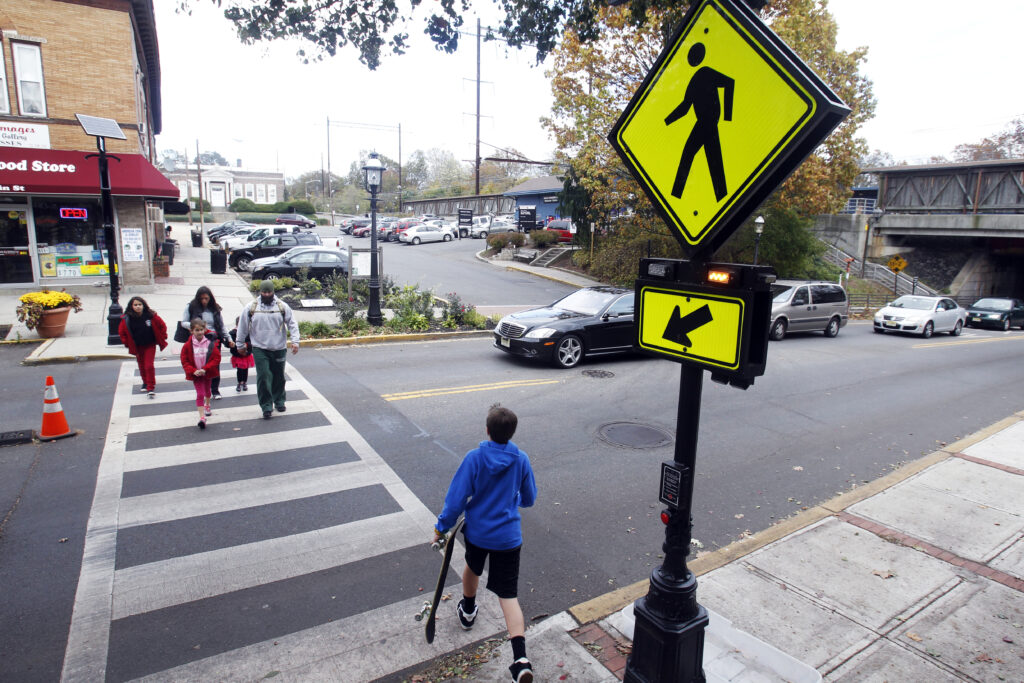
Projects must be located within two miles of a school that serves students in grades K-12. Infrastructure projects may include the installation of sidewalks, crosswalks, bike lanes, multi-use paths, traffic calming measures, and other means to ensure the ease and safety of children walking or biking to school.
Any municipality, school district, or county is eligible to apply for funding after a solicitation is announced. Non-profit organizations are not eligible as direct grant recipients for the solicitation. However, non-profit organizations may partner with a local public agency that will assume responsibility and administration for the grant.
The Safe Routes to School Program (SRTS) is funded through the Federal Highway Administration’s Federal Aid Program and is being administered by the New Jersey Department of Transportation (NJDOT), in partnership with the North Jersey Transportation Planning Authority (NJTPA).
Project Selection Criteria
- Supporting Policies – Benefitting school has a written policy supporting walking and bicycling to school, including a School Wellness Policy; the LPA has adopted a Complete Streets Policy; or the LPA Master Plan includes bicycle and pedestrian elements.
- Improve Safety – Improvements enhance the safety for students walking or bicycling to school.
- Increase Walking & Bicycling – Impact to mode choice which may increase the number of students walking or bicycling to school.
- Improve Connections – Connects to an existing local or regional bicycle or pedestrian network.
- Community Support- Community Support from those other than the applicant and local elected officials.
- Other Transportation Modes – A railroad crossing or highway ramp crossing will be improved as part of the project.
Project Profile: Highland Park
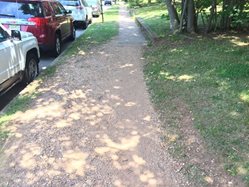
This SRTS infrastructure and intersection improvements, and ADA compliance project identified locations around the Irving School and Bartle School that did not have sidewalks or safe refuge locations for students to use during their commutes to and from school. Before being awarded the grant, Highland Park had adopted a School Travel plan and a Complete Streets Resolution. The SRTS project would install ADA-compliant sidewalks where they are currently missing to encourage safer walking conditions throughout the community.