
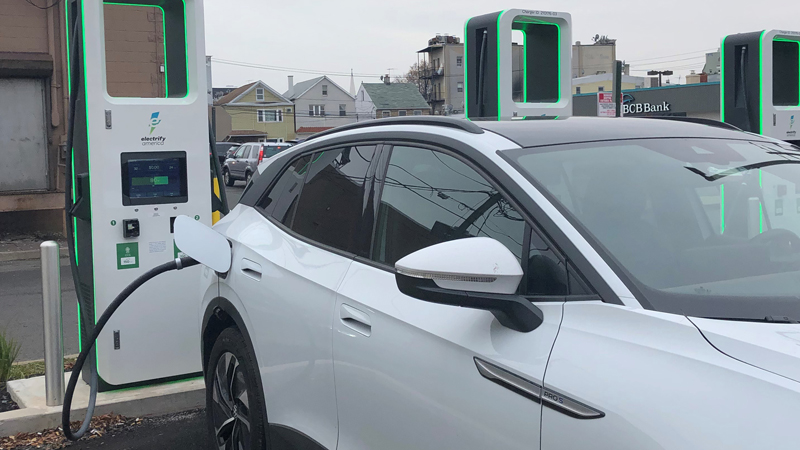
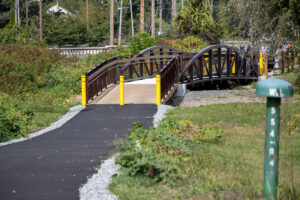
A shared use path connecting two towns in Morris County, an electric shuttle pilot program, and traffic signal optimization in Hudson County. Those are some of the projects funded in recent years by the Transportation Clean Air Measures (TCAM) program, which is now accepting applications for 2026 on a rolling basis.
 TCAM is one of two categories within the Congestion Mitigation and Air Quality Improvement (CMAQ) funded Program, which is supported by federal funds allocated to the NJTPA. It advances readily implementable and innovative projects and services that improve air quality and reduce congestion in the NJTPA’s air quality maintenance and non-attainment areas.
Funds are authorized by the Federal Highway Administration (FHWA) and project sponsors have up to three years to complete their project.
What’s eligible for TCAM?
Eligible activities in the TCAM program include:
- Alternative fuel vehicles
- Electric vehicles and infrastructure
- Diesel engine replacements/retrofits and zero emission vehicles
- Medium or heavy-duty zero emissions vehicles and related charging equipment
- Traffic signal optimization and adaptive traffic signal technology
- Technology for transit signal priority
- Bicycle and pedestrian facilities
- On- and off-road multi-use trails
- Vehicle activity programs
- Modernization of a lock and dam, or a marine highway corridor, connector or crossing
If air quality benefits can be demonstrated, projects and programs that target freight capital costs-rolling stock or ground infrastructure are also eligible.
Who’s eligible for TCAM?
Projects from public agencies require a minimum 20 percent local match, with recent awards ranging from $200,000 to $5 million. Eligible applicants include counties, municipalities in the NJTPA region, Transportation Management Associations (TMAs), public agencies, public-private partnerships, and, in some cases, private firms (which must provide a 50% match).
The application process is two steps: submission of a brief project thumbnail (maximum two pages), followed by a full application for selected proposals.
Successful TCAM projects will enhance environmentally beneficial programs through innovative approaches, support cross-jurisdictional partnerships, inspire further action, build public support, and leverage other funding sources.
Some examples of recent projects include:
- Hudson County (JFK Boulevard Traffic Signal Optimization) and City of Hoboken (Signal Optimization), $4,099,200
- Electric Signal Optimization/Adaptive Traffic Signals – Central Avenue/CR 508 (Essex County), $4,001,207
- North Jersey Regional Truck Replacement Program, Phase 4, $4,000,000
- Patriot’s Path Morristown/Hanover Shared Use Path (Morris County), $3,827,525
- Traffic Circulation & Signal Optimization (Paterson), $3,593,725
- Highlands Rail Trail, Phase II (Passaic County), $1,600,000
- Smart Corridor – Traffic Signal Coordination (Passaic County), $1,600,000
- Electric Shuttle Pilot Program (EZ Ride), $960,000
- Electric Monmouth (Monmouth County), $200,000
You can download the solicitation here and learn more about the CMAQ program here.