


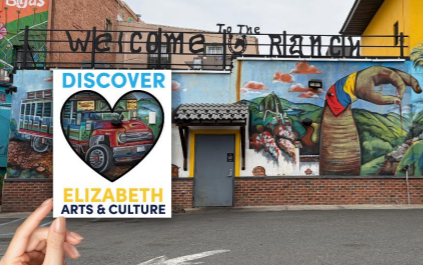
Murals, sculptures and artist studios are already part of the landscape in Midtown Elizabeth. A new placemaking plan looks to connect those existing assets while using public art to make streets, transit stops and other public spaces more inviting.
The recommendations envision art near bus stops and the train station, colorful intersections, temporary installations in vacant spaces and gateways that let people know they have entered an arts and culture destination. The goal is to make art part of the experience of walking, taking transit and spending time in Midtown.
Cate Heady, a research project coordinator at the Alan M. Voorhees Transportation Center at Rutgers University, provided an overview of the Discover Elizabeth Culture and Arts Placemaking Plan during the NJTPA’s Regional Transportation Advisory Committee meeting on August 10. The project was completed through the NJTPA’s Vibrant Places Program.
The Destination Elizabeth Culture and Arts, or DECA, effort brought together the Elizabeth Development Company, City of Elizabeth, Midtown Elizabeth Special Improvement District and other local stakeholders around a shared vision for the area.
“We wanted to create a placemaking plan that had public art as a central tool for placemaking, so that arts would be infused into streetscaping, programming and activation in their district,” Heady said.
The project team started by documenting what Elizabeth already has. Using ArcGIS, they mapped murals, sculptures, studio spaces and other cultural amenities. Because DECA wants to add more murals, the team also mapped blank walls that could become canvases for future artwork.
Community input helped shape what could come next. Through an English and Spanish questionnaire and in person outreach, residents identified culture and diversity, Elizabeth’s history, local pride and nature as themes they would like reflected in public art.
Residents also wanted more activities, particularly for children, older adults and other community groups. Functional art was the most popular type of art identified in the survey. That could include benches, lighting, trash cans and other infrastructure that also serves as artwork.
Those findings helped inform recommendations that connect art with the pedestrian and transit experience. The plan calls for prioritizing art near bus stops and the train station and incorporating artistic elements into intersections, crosswalks and daylighting treatments.
At the Elizabeth River Trail, for example, the team proposed a crosswalk and artwork that could make the area more pedestrian friendly while creating a gateway into the arts district.
The Elizabeth train station offered another opportunity. The team identified a wall near the station for a potential mural, but its location would make getting the necessary installation equipment into the space difficult. Instead, the plan recommends projected artwork that could welcome people arriving by train.
Activating Midtown
The plan also looks at how underused spaces could contribute to the district. Vacant storefronts, windows and parking lots could temporarily host gathering spaces, stages, pop ups and art displays. One concept calls for a playground featuring musical instruments, responding to community interest in more child-friendly spaces while incorporating art into the experience.
Events and programs were also popular with survey respondents. Heady said they could bring more people into Midtown while exposing them to public art already in place.
To support future projects, the team helped DECA develop an artist registry covering murals, sculpture, installations and functional art. When funding or new opportunities become available, the registry could help connect DECA with artists who can bring those projects to life.
The plan also seeks to make existing art easier to discover. The team created a public art map that can be embedded on a website and developed concepts for brochures and signs. Several local businesses have murals inside, Heady said, and QR code signs could direct visitors to the map and encourage them to explore those businesses and other destinations throughout Midtown.
Community involvement would remain a priority as those ideas move toward implementation.
“We strongly encourage that community engagement be a priority for DECA so that its work could have community support and buy in,” Heady said.
The team also examined funding strategies used by arts districts around the country, many of which rely on public and private partnerships. Because DECA is embedded within the Special Improvement District, Heady said, some of the relationship building needed to pursue those partnerships is already underway.
Together, the recommendations provide a path for connecting Elizabeth’s existing arts and cultural assets while creating new reasons to walk, explore and spend time in Midtown. Public art becomes more than something to see. It becomes part of how people experience the district.