


Check out our latest Complete Streets Demonstration Library Summary Booklet!
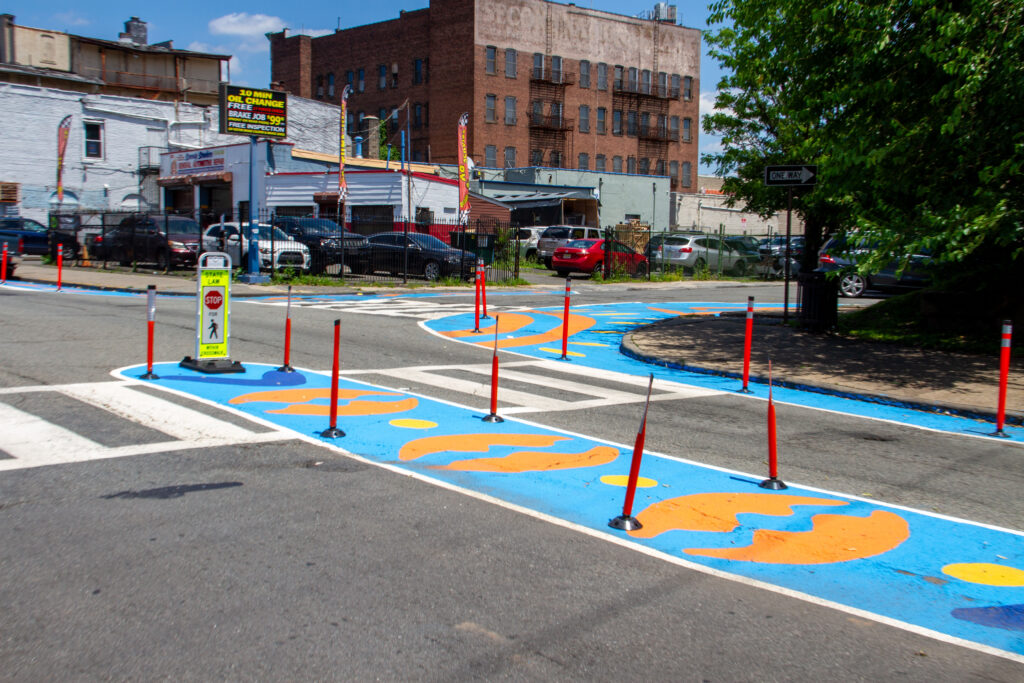
Many communities across the country have been implementing flexible, temporary street designs that help implement Complete Streets for all users and all travel types. Demonstration projects empower communities to test out road improvements to make their streets safer and more people-focused, utilizing short-term, low-cost, and scalable interventions to achieve long-term change related to street safety and public space. This approach can draw attention to perceived shortcomings, widen public engagement, test interventions, and inspire action.
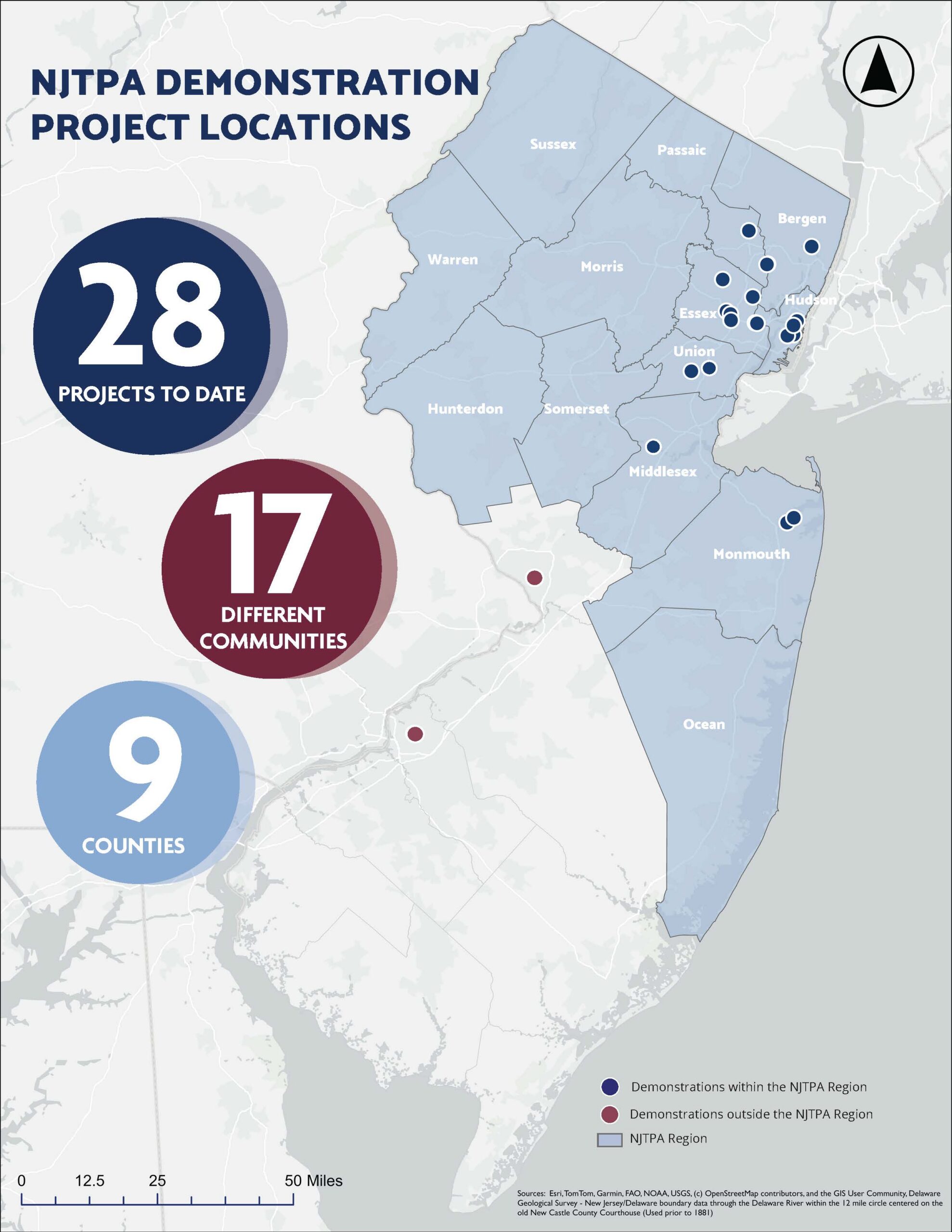
The NJTPA, in partnership with Hudson Transportation Management Association (Hudson TMA), created a Complete Streets Demonstration Library to support low-cost, quick-build projects. The NJTPA assembled a collection of delineator posts, barricades, traffic signs, paints, stencils, barriers, traffic cones, and other materials available for loan at no cost to communities that want to implement a temporary demonstration.
Purpose
The purpose of the program is to support and encourage greater use of the temporary demonstration project approach. The temporary nature of the projects enables communities to:
- Test bicycle lanes, corner “bump-outs,” pedestrian plazas, parklets in place of on-street parking spaces, and other safety, placemaking, and traffic-calming features.
- Engage communities through education related to safer street designs, placemaking, active transportation, and collecting real-time feedback.
- Evaluate the impact of street performance and safety.
Eligible Applicants
- New Jersey municipalities and counties are eligible to participate in the program.
- Demonstration projects may be coordinated with and supported by partners such as a community organization, TMAs, other government entities, or planning/engineering consultants.
- As a program located within the state TMA Program, the TMAs are key partners. Applications should be sent to the NJTPA with a Cc: to the TMA for your area.
- The point of contact must be an official or employee of the government entity with jurisdiction over the project.
Project Types & Materials
A wide variety of project types can be carried out using temporary materials. Projects can vary widely in size and duration, from a one-day parklet in a single parking stall to a multi-block bike lane lasting several months. Some common examples include:

The following materials are available through this program. Availability is subject to change – contact program staff.
- Paint (acrylic traffic paint, tempera, spray chalk/paint, chalk line)
- Signs & Stencils (bike and crosswalk signs, yield to pedestrian in-crosswalk sign, bicycle, asphalt art, arrows, and demarcation stencils)
- Placemaking materials (park bench, picnic table, astro-turf mat)
- Tools (tape measure, utility knife, paint brushes and rollers, paint buckets, epoxy tube kit)
- Traffic Control Devices (cones, barricades, delineators, plastic barriers, rubber parking stops)
- Tape (traffic tape, duct tape)
- Clean-up items (electric power washer, broom, metal scraper)
Technical Assistance
- Design: Recipients are responsible for preparing a design that complies with relevant design guidelines and standards.
- Approval: The design must meet the approval of the municipality or private property owner with jurisdiction over the project location.
- Design Assistance: NJTPA staff are available to provide design assistance upon request.
Assistance and ideas may be available from the following sources:
From Streets to Stadiums Guidebook Webinar
On April 9, 2026, the NJTPA was joined by Downtown New Jersey for the “From Streets to Stadiums Guidebook Launch and Workshop” webinar to show communities and businesses how to turn ideas from the recently released NJTPA guidebook “From Streets to Stadiums” into action. This webinar:
- Provides information on available resources to help make it all happen
- Showcases what’s included in “From Streets to Stadiums”
- Highlights how this tournament gives your town a chance to shine
- Explores what can be learned from the world’s game in NJ that can boost excitement for future events
- Shares best practices for promoting and publicizing your event