


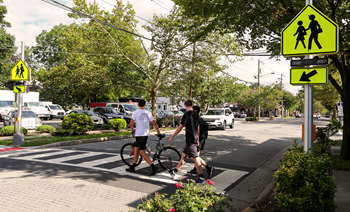
The NJTPA is committed to promoting walking and biking in its region. Its goal is to make these two travel modes convenient, safe, efficient, and attractive as viable alternatives to cars for shorter trips.

Much of this commitment is made through direct investment in bicycle and  pedestrian facilities including bicycle and pedestrian trails, pedestrian overpasses, and waterfront walkways. In addition, various transportation projects, such as bridge replacements and intersection improvements, incorporate features to make walking and biking safer and more attractive travel options in the region.

The NJTPA also conducts planning to support walking and biking including the following:

The NJTPA completed its Regional Active Transportation Plan (ATP) in 2023 to help establish a safe and functional regional network of pedestrian and bicycle facilities. This consultant-supported study aims to advance the regional goal of increasing non-motorized travel options by strategically addressing critical gaps in the regional active transportation network. The development of the plan included outreach and data-driven methods, and advancing strategies from the Long Range Transportation Plan to prioritize equitable access to the regional network. The NJTPA is supporting ATP implementation by providing an interactive mapping tool and data.  In 2026 the NJTPA will begin an Active Transportation Plan Refinement study to develop short-term and long-term recommendations for critical corridors identified in the Plan.

The NJTPA analyzed the road network for the purpose of creating a Level of Bicycle Compatibility (LBC) index for the region. This initiative supports the goal of safe and efficient access for all modes of travel. The analysis provides the groundwork for assessing bicycle network connectivity for the region, including off-road bike paths. This analysis included reviews of similar analyses by other agencies from which NJTPA created a four-level categorization of bicycle compatibility (sometimes referred to as bicycle comfort or level of traffic stress) for each road and path in the region. NJTPA has a description of the criteria as well a map with the latest LBC measures. 

The NJTPA leads the wide-ranging Street Smart pedestrian safety education and enforcement campaign, which began in four pilot communities in 2013, and has expanded statewide to more than 200 communities, with additional campaigns conducted each month. Campaign materials are available on the Street Smart NJ resources page.  To learn more, visit our Street Smart NJ website.

The NJTPA Complete Streets Technical Assistance Program conducts Walkable Community Workshops, creates bicycle network plans, and organizes temporary demonstration projects that identify and build community support for active transportation and safety improvements. This program, delivered with the Sustainable Jersey and the Voorhees Transportation Center at Rutgers University, is provided on a competitive basis to interested municipalities. The NJTPA also conducted Walkable Community Workshops prior to the creation of the technical assistance program. 

The NJTPA supports and encourages the adoption of  Complete Streets policies to provide safe access for all roadway users, of all ages and abilities, including bicyclists, pedestrians, and transit riders. Complete Streets incorporate design and operational features that create a comprehensive, integrated, and connected multimodal network of transportation options. The NJTPA also supports and coordinates with NJDOT’s statewide Complete Streets Policy and the Safe Routes to School program.  

The NJTPA has supported the completion of New Jersey’s portion of the East Coast Greenway. This is a 2,600-mile planned route that combines connected on-road and off-road facilities from Maine to Florida. 

The NJTPA has supported planning studies of the historic Morris Canal, including in Warren County, Jersey City in Hudson County and in Passaic County. The Morris Canal Working Group (MCWG) builds upon those efforts. The working group brings together stakeholders and other interested parties to discuss this important resource and to help coordinate current and future plans for the corridor. Membership in the Morris Canal Working Group is open to all interested parties. Additional information on the Working Group is available at www.morriscanalgreenway.org